|
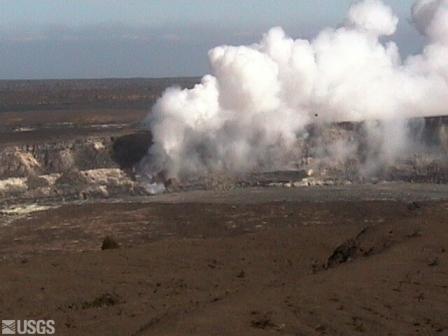
HILO AND ITS VOLCANO The active volcano, Kilauea, above us continues to output gas, ash, and occationally eruptions of lava. During the day a thick continuous cloud of white choking smoke and toxic gas heads south out to sea, inundating most of Ka'u as well as Kona where people have been in
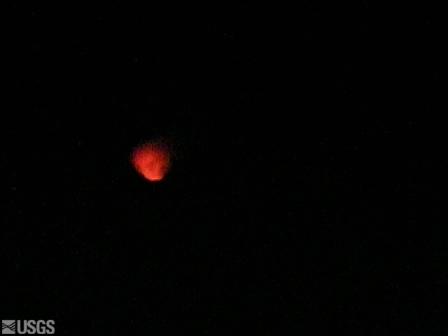
almost constant overcast skies for the past 6 weeks. At night the vent above, within Kilauea crater, glows.
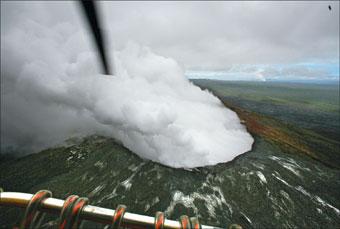
Sometimes the radiant emissions of lava spray very high in the sky. You can watch a live CAM of the eruption around the clock. In the past weeks another vent (Pu'u O'o vent) on the lower side of the volcano, about 15 miles from the Kilauea
crater towards Hilo, began spewing gasses in earnest and has created a cinder cone.
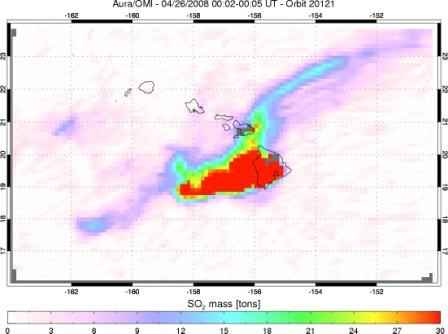
It has been active a while, but the amount of emissions has increased adding yet more vog to the area. NASA's Earth Observatory has been monitoring Kilauea from space. The Ozone Monitoring Instrument (OMI) on NASA’s Aura satellite has been recording the increase in sulfur dioxide rising out of Kilauea.
All this volcanic gas is building up southeast of the Big Island (that big red blob) and moving northwest with the tradewinds, covering Maui and Oahu. The evening news now covers the vog daily and if winds move it out of Oahu or require the folks in Oahu to stay indoors. Hilo is the farthest east point in the Hawaii islands and it is currently the least impacted by vog. When the winds stop, we get a haze from buildup of the emissions stuck in the area. As soon as the wind picks up, the haze moves out. We have never gotten a reading of SO2 in our neighborhood. The refreshing rains clean the air often as well, something the west side of the island doesn't have.
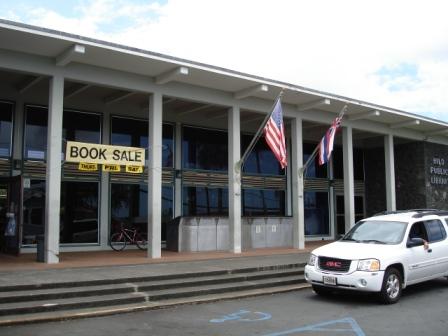
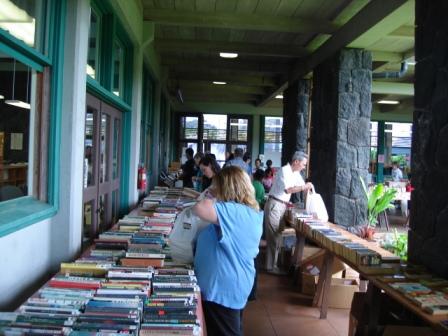
As the weeks go on without let up in emissions and the only indicators showing more activity within the volcano, Hawaiians wonder what the impact of the pollution will be to tourism and residents. HILO LIBRARY The Friends of the Hilo Library had a book sale last Thursday through Saturday. We went on Saturday looking for leftover book deals.
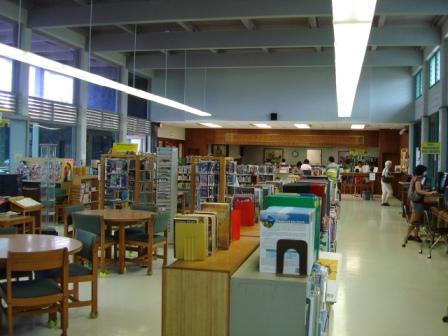
There were still books left and we managed to find a half a bag of books that looked interestingl. $1 -Not bad. The library is nice with an enclosed area for children.
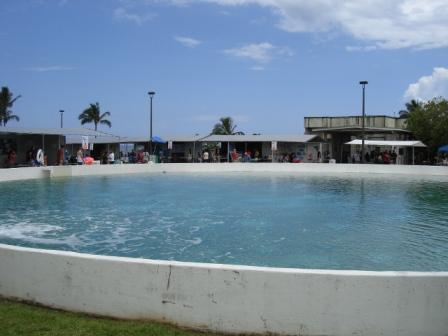
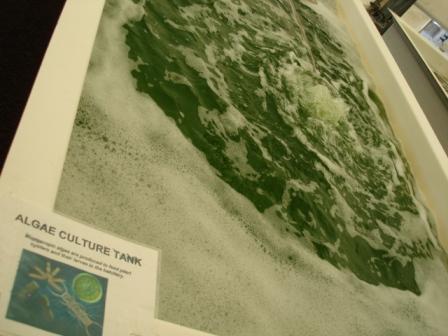
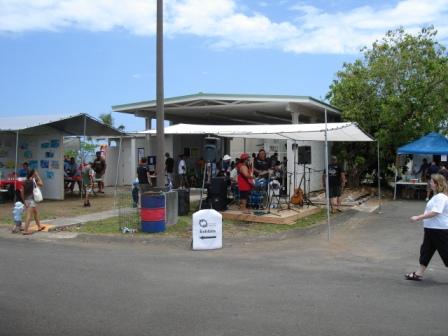
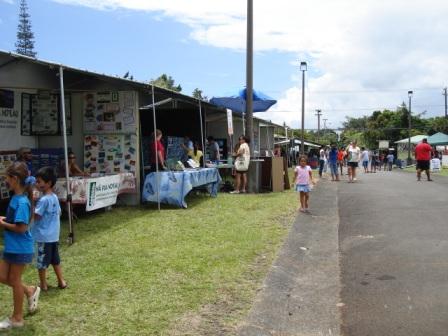
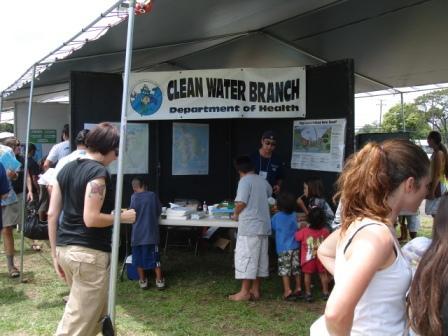
It looks like a great place to study or get away. OCEAN DAY IN HILO This past weekend was Ocean Day, sponsored by UHH (University of Hawaii Hilo) and many other organizations at the Pacific Aquaculture and Coastal Resource Center (PACRC). PARC is a 12 acre research center located next to the Hilo harbor where the old sewer plant used to be.
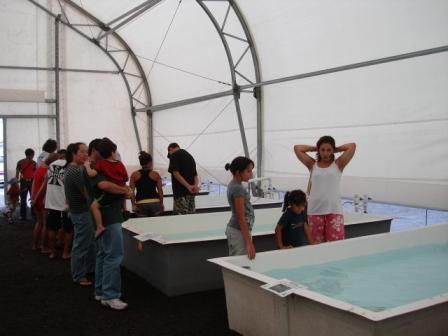
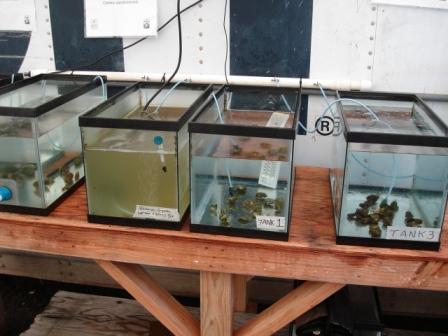
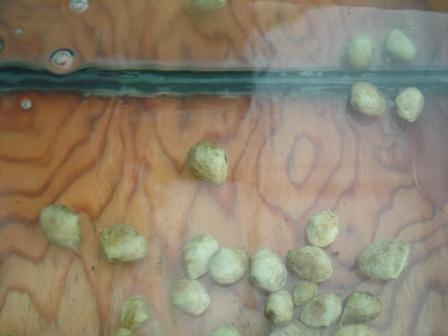
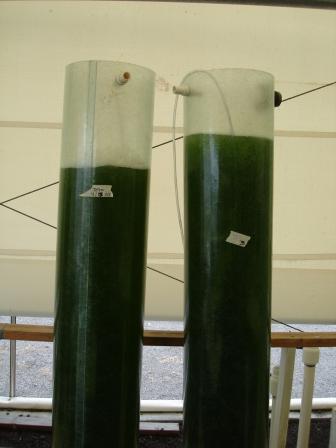
They have fixed the place up and begun aquaculture projects primarily raising clams and oysters hoping to create new industry in Hilo. The center has two large enclosures with numerous tanks of fish.
Oysters and clams are being cultivated in tanks.
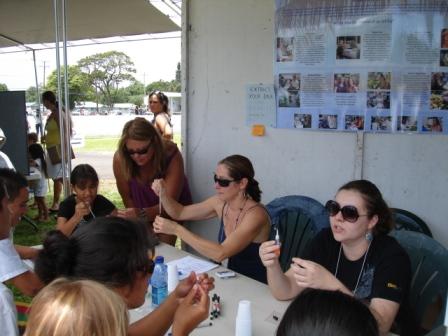
In addition to allowing us to see the UHH PACRC projects, Ocean Day had a lot of booths sponsored by many organizations and other departments at UHH. They also had a band and food.
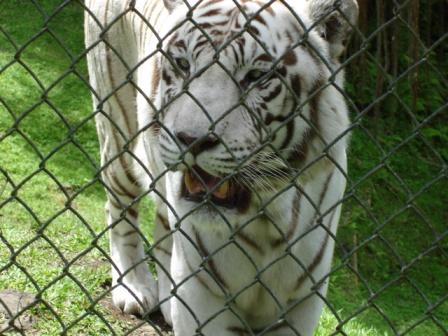
It was an interesting event and we were glad we went. HILO PANA'EWA ZOO AND GARDENS We spent the morning at the zoo the other day. As usual it was quiet and serene. We strolled along the paths and took in the colorful tropical flowers. Namaste was on the move, marking his territory so he came up really close to us for a photo. A photo tour of our morning is here.
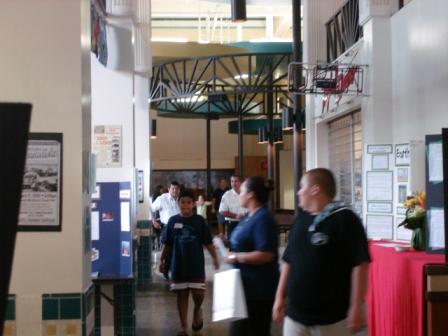
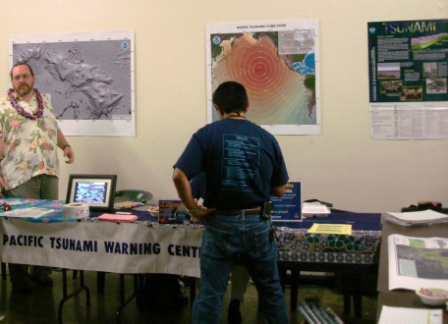
DISASTER PREP IN HILO We attended a Tsunami Safe Disaster Preparedness Fair in downtown Hilo (at the Connections Charter School in the Kress Building) last Saturday.
Hiloites have a lot of disasters to prepare for: flood, lava flows, volcano emissions, tsunamis and earthquakes. There are probably more, but those are enough. Hilo is impacted by distant tsunamis which may arrive hours after an event, like an earthquake on the West Coast of North America as well as local tsunamis that occur immediately following an event like a lava shelf created from the volcano crashing into the ocean or a massive earthquake.
A scientist from NOAA's Pacific Tsunami Warning Center in Oahu was at the fair. The center has received additional funding since the major tsunami in Asia in 2004. Now they have 7x24 hour coverage and another center in Alaska backs them up if Oahu is taken out. One of the risks of the lava pouring out of the volcano and older lava shelves along the Ka'u coast of Hawaii, is that they could break off and create a huge tsunami wave with no warning at all. They showed very cool 3D photos of previous shelf cave ins that occured a long time ago in Oahu. The Pacific Tsunami Museum in downtown Hilo keeps the history of Hilo and impact of tsunamis to the town alive. Following the terrible tsunami in 1946 and more recent one in 1960, the Japanese village of Shinmachi ("New Town") and Waiakea Town, also known as Yashijima ("Coconut Island") in Hilo were destroyed. These areas were converted to parks and golf courses rather than being rebuilt. Even so, most of downtown Hilo, all the county buildings and all the hotels on the Banyon peninsula are in flood zones and would be hit hard if another tsunami occurs. Hilo Bay's north facing mouth and shape makes it a target for tsunamis. The town's early warning sirens will minimize fatalities for distant tsunamis but further destruction of downtown is expected to occur. Envision Downtown Hilo 2025 is a community based vision and living action plan for Hilo created by citizens and endorsed by the Hawaii County Council. They are working on numerous projects and supporting tsunami preparation and safety in Hilo.
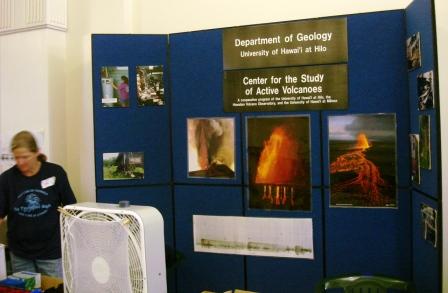
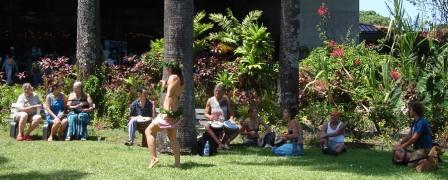
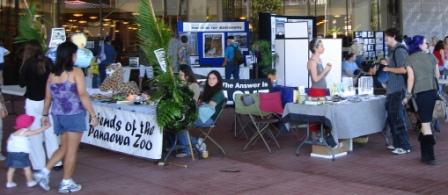
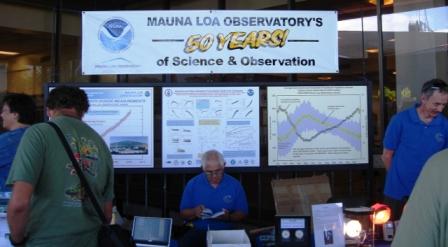
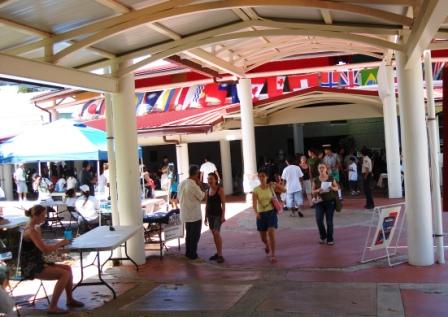
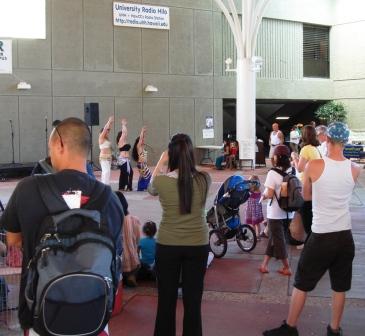
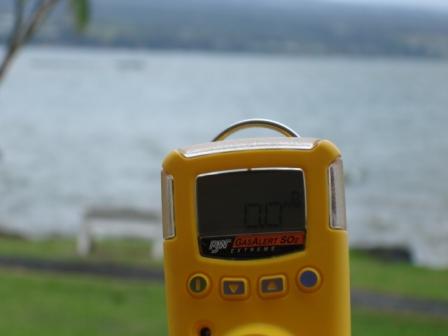
Since we live outside Hilo's flood zone, we are more concerned about the volcano growing in activity right up our hill. The Center for the study of Active Volcanos was represented at the fair. Most of the dangers from volcanic emissions seem to be related to Sulfuric dioxide (SO2). Thus far our SO2 detector has only had a zero reading. We asked the volcanologist why the vog we get in Hilo has no SO2 and what is in vog anyway. No answers. We did get directions on how to get rid of vog with a box fan, water, baking soda, and cheese cloth. All in all Hawaii county has done a good job informing and preparing the public for disasters. EARTH DAY This weekend was Earth Day, celebrated all over Hawaii. The Hawaii Community College in Hilo sponsored an event at the University of Hawaii Hilo campus. We went over there to check it out. We were met with drums and dancing on the lawn. Booths from local organizations covered the porch in front of the UHH library. NOAA, with offices in Hilo and an observatory up at 11,000 feet on Mauna Loa, had a large display about their research. It was a good way to learn about a lot of organizations and government offices in Hilo concerned about and helping the environment.
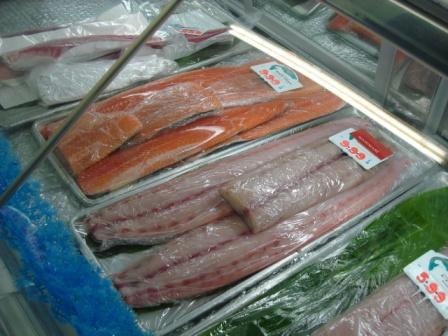
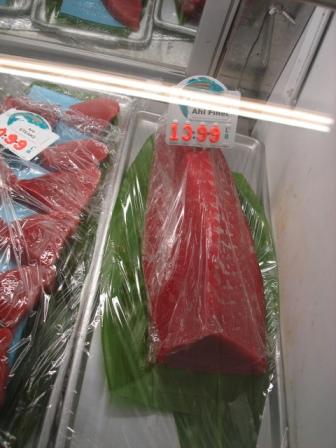
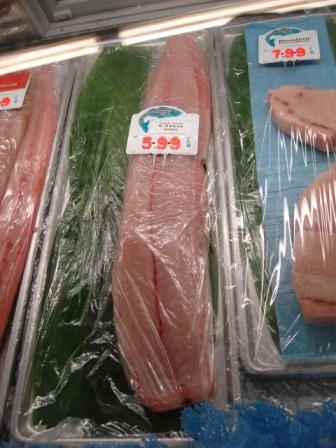
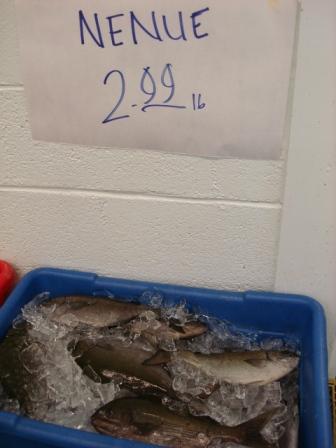
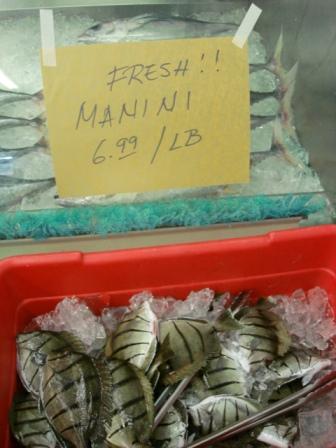
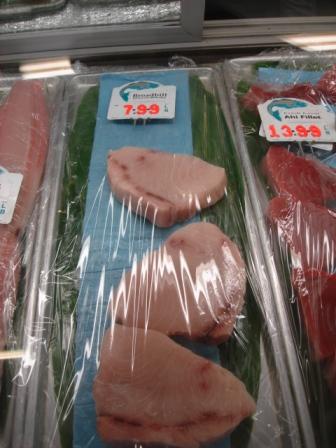
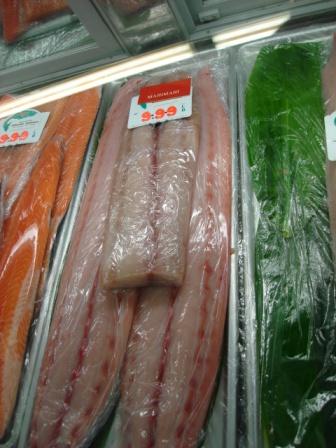
SHOPPING FOR FISH IN HILO We went looking for fish at our favorite fish store, Suisan in Hilo. The display cases were full with Salmon, Mahi Mahi, Ono, Ahi, and we love them all. We point to the fish we like best and get the amount desired. The Ahi tuna is amazing.
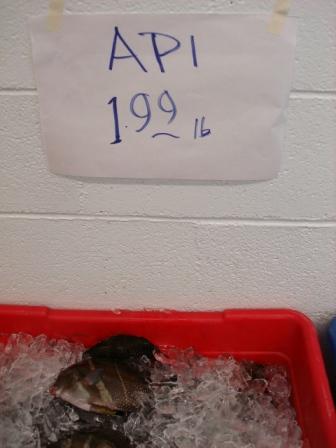
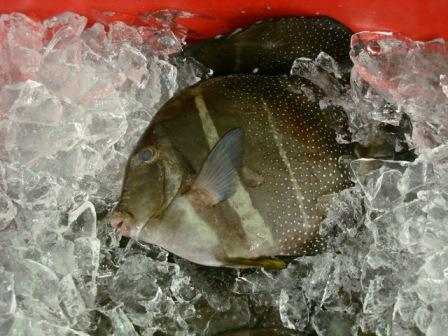
There are lots of other fish that maybe some day I will figure out how to cook.
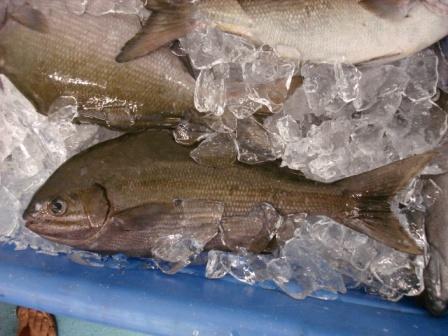
Nenue is chub fish - this is a grey chub.
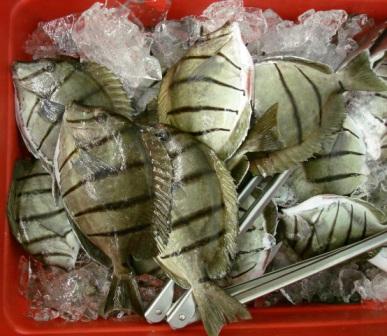
Manini is convict Tang fish - the fish look like they are dressed up in prison clothes.
The are white steaks of Broadbill fish. And the mahi mahi is widely available this time of year.
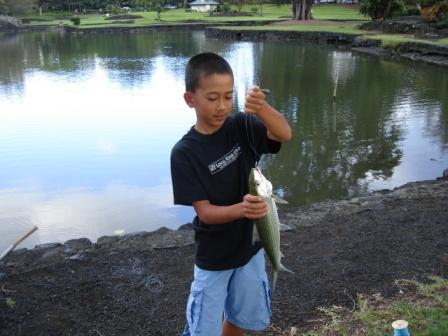
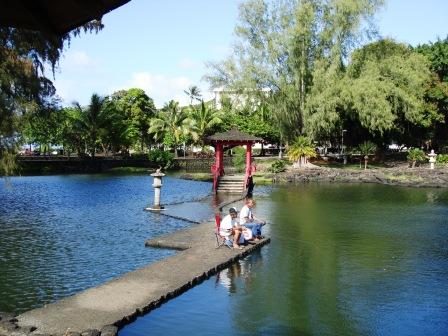
If you love fish, Hilo is one of the best spots in the world. The fishing boats go out of Hilo harbor and bring back their catch which is transported from the dock to Hilo International airport (about 1500 feet) and flown around the world. We get to have the best selection and most fresh fish. PICTURES IN HILO PARK When we take daily walks, we often see people fishing in the Liliuokalani park ponds. The ponds are connected to Hilo Bay so the level of water goes up and down with the tides and fish swim into the ponds to feed. I've always wondered what they are catching. Today we witnessed a catch. A boy had tied a fishing line to a stake and thrown it out into one of the ponds, with only a hook and bait. When we walked by, we saw the line moving. The boy pulled on the line and was rewarded by a large silvery fish; a Bonefish. It confirmed our belief that we can always get dinner at the park.
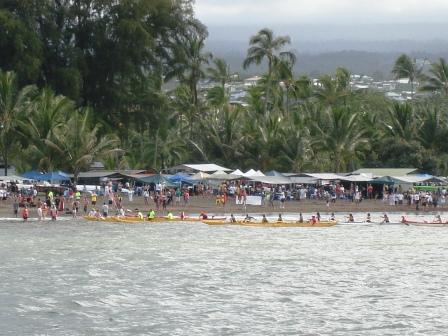
On our walk in the park, we saw a canoe race across the bay sponsored by the Kamehameha Canoe Club. It was an annual Business Canoe Reggata with teams of business women and men and teens. The canoes paddled out to flags where the race started and the teams raced to another flag horizonal to the shore.
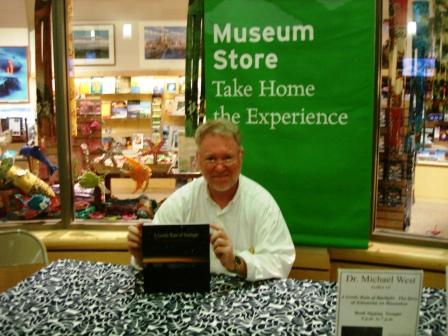
Dr. WEST IN HILO Yesterday evening, Dr. Mike West was in town and gave a presentation at the 'Imiloa Astronomy Center and had a book signing.
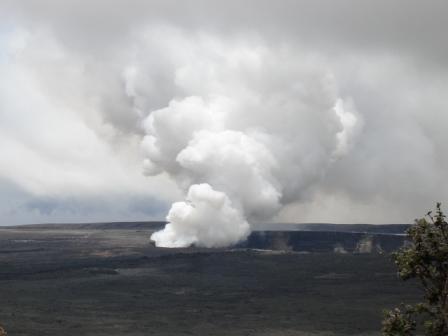
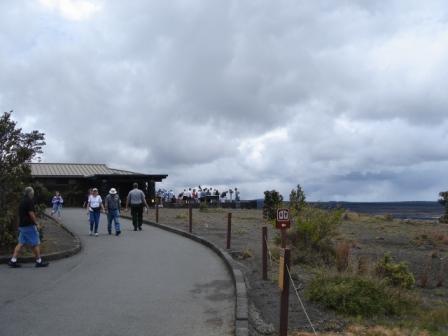
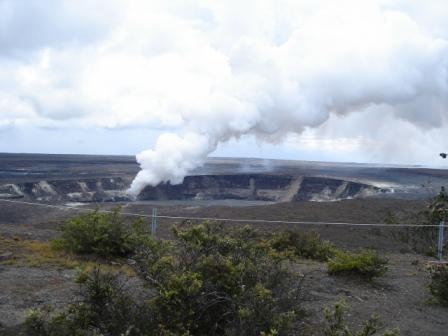
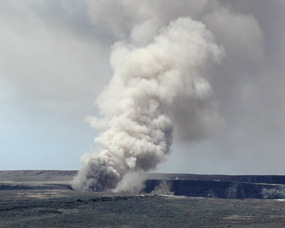
Dr. West works in Chile for the European Organisation for Astronomical Research in the Southern Hemisphere(ESO). He talked about proposed projects for super telescopes that will be operational in 2016 or later and their design and location challenges. This week in Hilo, there is an evening Astrotalk about galaxies by a member of the Smithsonian Submillimeter Array team at UHH and an evening lecture at the NOAA Mokupapapa Discovery center downtown. UHH is sponsoring an evening Writer's workshop by a Newberry award winner and there are performances at the Palace Theater and UHH Performing Arts Center. There seens to be no shortage of things to keep us stimulated and preoccupied. A VISIT TO THE VOLCANO Today we drove to Volcanoes National Park which is a 45 minute drive from where we live in Hilo (29 miles to the park's visitors center). Since the park had reopened yesterday and the tradewinds were strong, we decided today was the day to go and check out the volcanic activity. First we went to Volcano House, a hotel inside the park and across from the park's Visitor's center. The hotel is perched on Kilauea caldera and has a viewing area where you can see the volcanic ashes and gasses coming from the Halema'uma vent.
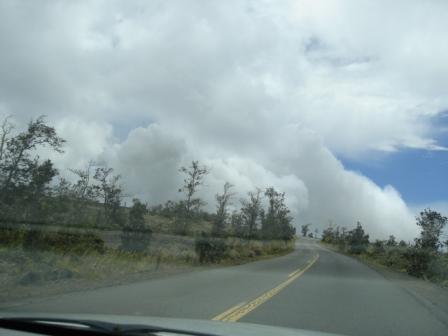
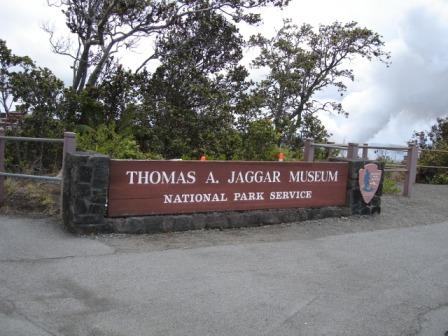
Here is a video of the volcanic activity from the Volcano House viewing area: Next we drove on Crater Rim Drive within Volcanoes National Park to the Jaggar Museum. There was a little bit of a sulfury smell on the road, but our SO2 monitor stayed at a zero reading.
Jagger Musem is closer to the Halema'uma crater so we could look down at the vent from the museum's viewing area.
The park was packed with tourists from around the world, all very excited about seeing an active volcano.
The view was great from the outlook. This is where the live CAM of the Halema'uma vent is located.
Here is a video of the volcanic activity from the Jaggar museum lookout. THE IMPACT OF THE VOLCANO TO HILO The big story on the Big Island is the rising activity of the Kilauea shield volcano. The volcano and nearby areas have been having increased earthquake activity, vents spewing lava, and increased output of volcanic gasses.
The county of Hawaii created a sulfur dioxide condition color chart and almost immediately the residential areas near the volcano were rated purple-Extreme. The Volcanoes National park was shut down and evacuated including residents and folks staying at Volcano House located in the park. Evacuation in the county is voluntary so most people didn't leave their homes. The state recommends staying indoors and running an AC, which no one around here has. Real time information about the air quality due to the volcano is limited. Our best source of the volcanic gas output is the live CAM of Halema'uma vent in the Kilauea crater (at night it glows red). We know that Sulfur Dioxide (SO2) is a problem and so we have personally prepared ourselves by buying a detector that warns us when the SO2 levels get dangerous and gas masks to use in case of high levels. Though we have no AC, we have carbon based Hepa air filters. Our distributor tells us that SO2 reduces oxygen to the body, so you can't go to sleep, even with a mask on or you will suffocate at the levels of SO2 being reported near the volcano ( 9 parts per million).
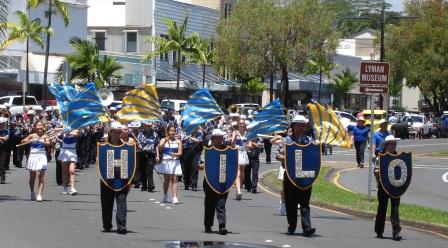
We have been taking SO2 readings in Hilo, but they are nominal - 0.00. The vog has been heavy, but vog doesn't necessarily consist of SO2. The vog looks just like pollution in So. Cal. to us. Assuming we have to evacuate due to the volcano as a result of SO2 levels or hurtling rocks heading our way we have three roads to the other side of the island, an airport and a seaport. The western side of the Big Island has been having worse SO2 levels and vog than Hilo, so that may or may not be a good place to flee. The road through Volcano may be cut off by lava or gas as well as Saddle road which cuts through Mauna Kea and Mauna Loa to Waimea. Our plans and preparations are not stressing us out. We compare it to the plans and preparations we made for the big earthquake while we were living in Northern California. The difference in Hilo is that food and water are plentiful on trees and nearby streams. Compared to our concerns about massive infrastructure destruction in California and knowing that no help would be on the way (as seen in New Orleans), Hilo feels safe to us. If catastrophe strikes, there is no other place we would rather be than on the Big Island. This morning the Volcanoes National Park reopened and the trade winds moved a lot of the SO2 out of the area. THE HILO PARADE It took a while, but I finally organized all the photos and videos that I took of the Merrie Monarch parade on April 5 in downtown Hilo. I had a hard time cutting back on the number of photos because I took so many. In the end, I kept most of them and put them together on a Merrie Monarch Parade page.
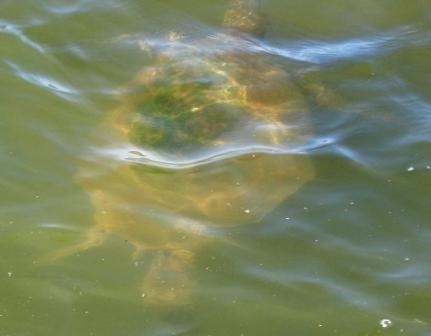
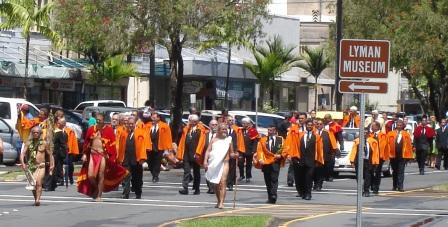
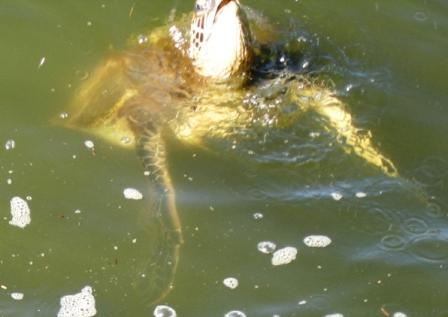
A parade tells you a lot about a town, and Hilo is not an average town. The parade had representation from local Hawaiian culture organizations, Hawaiian language immersion charter schools, and hula schools. The Royal Hawaiian float displayed the court of King David Kalakaua and was escorted by the Royal Order of Kamehameha I. Every Hawaiian island had a Princesses on horseback with a horse entourage. All offices of Hawaii county were represented, the police department, the fire department, the county council, and Mayor Harry Kim walked the circuit. The county handed out leaflets trying to recruit for their many open positions. The Navy came out in a big way showing their local influence in Hilo, as well as the Army reserve which has a faciltiy in town and the local ROTC. All the high schools and intermediate schools in Hilo had marching bands playing; the Boys and Girls club came out, Hilo against drugs, as well as a local "Flippers" gymnastics club. The University of Hawaii Hilo Pharmacy school showed their strength and representation from all the Astronomy Observatories in town were in the parade. The parade included the Hilo Grandmother of the year, the Korean war vets, the Hilo Community Garden, and an Okinawa group preparing for an upcoming festival. The participants in the parade waved and often stopped to talk to people in the crowd. It was informal and lots of fun on a goregeous day in Hilo. A TURTLE IN HILO While taking our daily walk in the Liliuokalani Gardens we came across a turtle. We noticed a group of people peering into Hilo Bay from one of the piers that extends out from the parking lot. Being ever curious we walked over and the group gathered around told us that a turtle was eating the moss off the side of the pier. We hadn't seen turtles in Hilo (lots in Kona and along the coast in Ka'u). They had already named him "Patch" because he had a large patch of moss on the top of his shell. So we waited for him to surface to breath. I didn't get great pictures, but you can get a glimpse of our Hilo turtle: Patch.
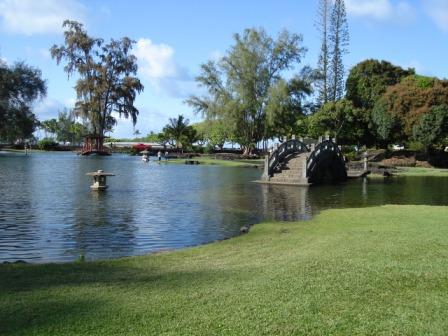
MERRIE MONARCH IS OVER Merrie Monarch is over. It was wonderful, but also exhasting. There were so many events to go to and we stayed up to watch the actual hula competitions both nights. Last night the awards were given out at midnight. I can't imagine how late everyone at the stadium finally got home or back to their hotel rooms. Merrie Monarch involves everyone in the town. The folks that didn't go to hula events, were at or in the parade, or worked overtime in the hotels and businesses serving all the visitors. Today, everyone is tired, trying to catch up on shopping. And the out-of-towners are heading back to their islands and the mainland. The weather has been cool, around 65 degrees F in the morning.Today it warmed up. When we did our daily walk in Liliuokalani park on Hilo Bay, we noticed the tide was high. The bridge paths were covered with water.
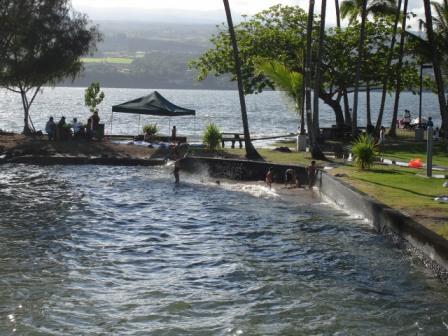
Wandering over to Coconut island, kids were playing in the waves lapping up against the island and having a great time.
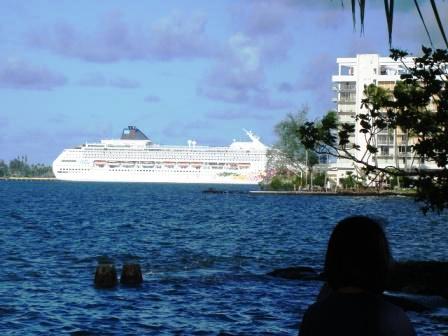
From Coconut Island, we could see the NCLs docked at Hilo harbor.
MERRIE MONARCH PARADE This morning we went downtown Hilo to see the Merrie Monarch Royal parade. It was quite a parade. It took 4 hours for the parade to pass by.
Here is a video of the Royal court and their float.
We keep posting new hula videos on YouTube. There are so many. One of the dances that was really fun was performed by the Te Vai Ura Nui Tahitian dance group from Oahu. In the dance, the men teased by wiggling their behinds to a very exuberant crowd. This video shows how enthusiastic the crowd was at the free Ho'ike on Wednesday. The crowd is singing along with a dance group from Mexico invited to Merrie Monarch. MORE HILO HULA Last night we went to the Merrie Monarch Ho'ike, a free evening hula event. It was packed with thousands of people. The crowd was so wonderful and added to the excitement and fun of the event. Unfortunately, we were behind the stage with lights in our eyes and much of the hula was faced the other direction. But even so we took videos and pictures of the event and created a Ho'ike page. Today Hilo's weather was gorgeous. The wind was blowing and white caps were crashing up against the sea wall. Here is a video of the sight.
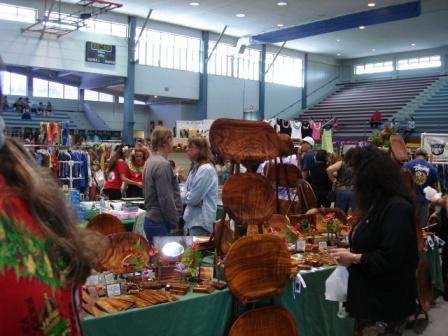
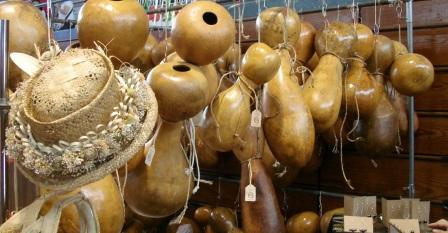
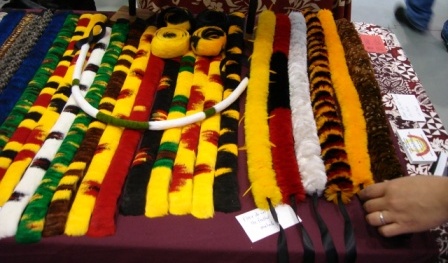
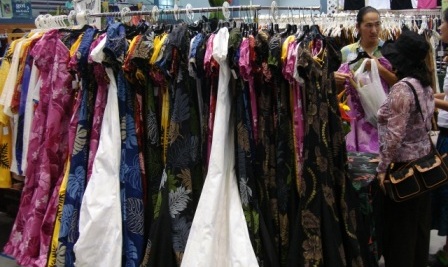
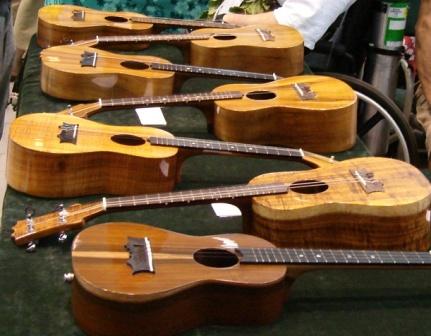
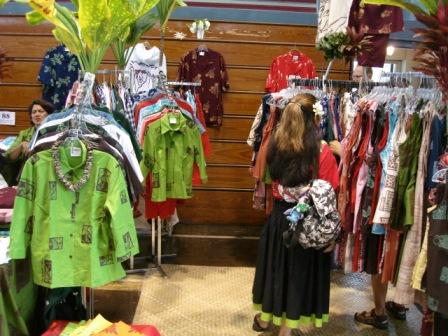
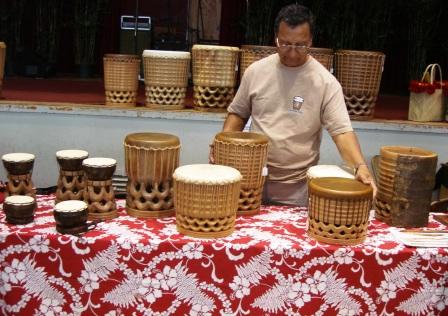
MERRIE MONARCH INVITATIONAL HAWAIIAN ARTS & CRAFTS SHOW We went to the Civic Auditorium to see the official arts and crafts fair.
The place was filled with hand made items, clothes, wood carvings, musical instruments, gourds, feather leis, cards, all beautiful. There are a lot of very skilled and gifted artisans in Hawaii.
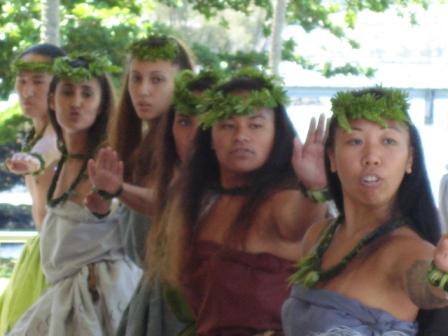
MERRIE MONARCH WEEK IN HILO We have been having a fun time attending Merrie Monarch events. You can look at pictures and videos of the March 30 Ho'olaulea and pictures and videos of the April 1 Hawaii Community College hula and Halau Kou Lima hula. Or you can see all the videos on YouTube. Tonight is the Ho'ike free exhibition and we will be there taking pictures Hula is so amazing to watch. It is expressive and the dancers draw you in and the music and singing is wonderful. At one of the events in the Hilo Hawaiian Hotel, a woman from the audience stood up and gave us spontaneous Hula to "Hilo, Our Home Town". Uncle George Naope, one of the Merrie Monarch founders, and a hula kumu (teacher) attended the hula shows and was coaxed into singing.
We really liked the Hawaii Community College group's Hula chants. They are a very impressive group of hula dancers.
Previous March 2008 Hilo Log posts
Copyright 2008-2017 |